Kuningan 2026: Bali’s Quiet Goodbye on 27 June
- Anushka Lockhart
- Jun 14
- 5 min read

Kuningan falls on Saturday, 27 June 2026. It is the day Bali says goodbye. After ten days of Galungan — the celebration that begins on 17 June — Kuningan closes the cycle: the morning the ancestral spirits who came down to visit their families return to the heavens. If you are in Canggu that week, you will wake to streets lined with bamboo penjor poles, the smell of turmeric rice drifting out of family compounds, and temples filling up before the sun gets high.
Here is the part most travel guides skip. 2026 is a rare year with only one Galungan. The Balinese Pawukon calendar runs on a 210-day cycle, so most Gregorian years catch two of these celebrations. This one catches a single, clean cycle — which makes the stretch from 17 to 27 June the most concentrated week of ceremony you will see on the island all year.
You do not need to be Hindu, or invited, or anywhere near Ubud to feel it. It happens on every street in Padonan, outside every warung in Berawa, along every lane you will drive down. Below: what Kuningan actually is, what you will see on the day, and how to move around the island that week without getting in the way.

What Kuningan actually means (and how it differs from Galungan)
Galungan, on 17 June, marks the victory of dharma over adharma — order over chaos, good over the other thing. It is when Balinese Hindus believe the spirits of their ancestors descend to visit the family home. The penjor go up, the offerings are laid out, and for ten days the ancestors are, in a real sense, guests. (We covered Galungan in full here.)
Kuningan is the farewell. Ten days later, on 27 June, families gather one last time to honour the ancestors before they return to the divine realm. There is a deadline built into the day: the prayers and offerings have to be finished before noon, because midday is when the spirits are believed to leave. After that, the island quietly exhales.
The name comes from kuning — yellow. You will understand why the moment you smell breakfast.
What you will see in Canggu on 27 June
Start with the penjor. These are the tall bamboo poles arching over every gateway and roadside, weighted at the tip with a curl of palm leaf and hung with rice, fruit and coconut. They go up for Galungan and stay through Kuningan, which means your whole week of driving to the beach runs under a canopy of them. They are, frankly, the best free thing in Bali.
Then the people. Families head to the temple in full ceremonial dress — women in lace kebaya and sashes, men in udeng headcloths — carrying gebogan, towering offerings of fruit and cake stacked on a single tray and balanced, somehow, on one head. You will see most of this in the morning, because of that noon deadline.
Here is what to watch for through the week:
Penjor poles arching over nearly every road and gateway
Families in white and gold heading to temple before midday
Gebogan — fruit-and-cake offerings carried balanced on the head
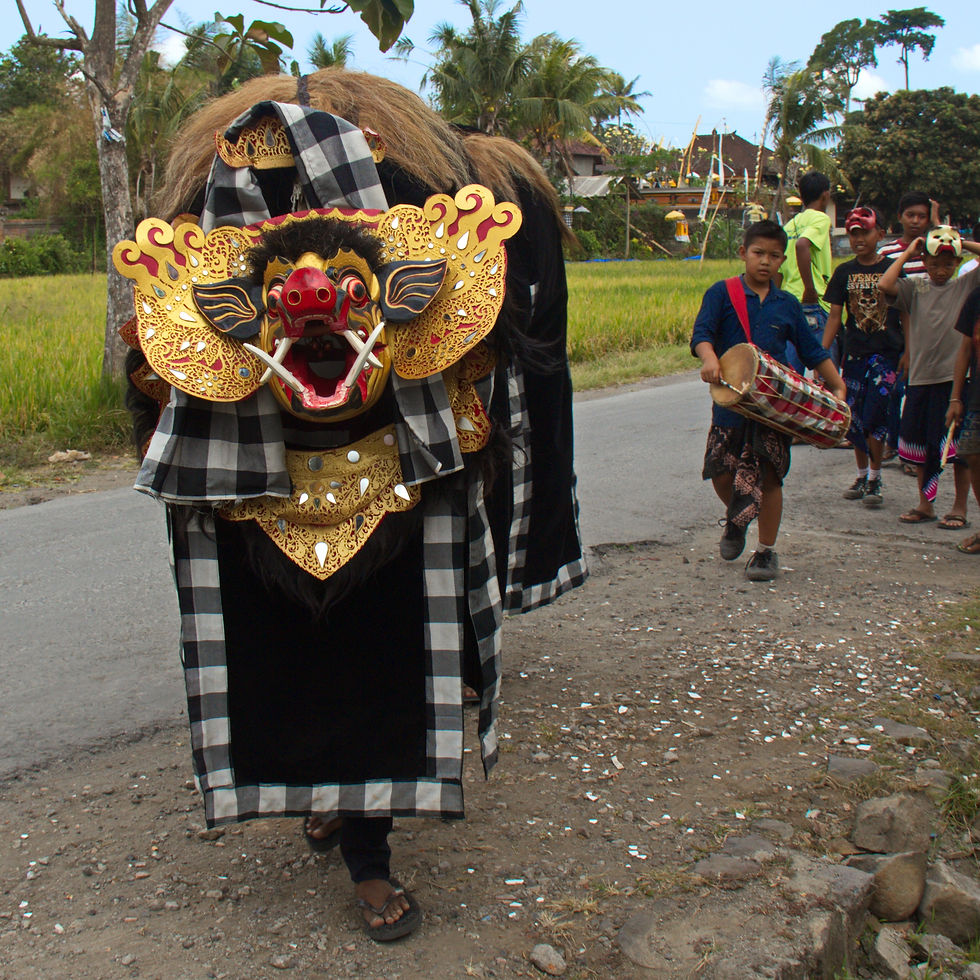
Barong ngelawang — children parading a shaggy barong door to door to bless the village
Far quieter roads by mid-afternoon, once the ceremonies wrap
That last one matters more than it sounds. Galungan and Kuningan mornings are the rare hours when Canggu traffic actually thins, because half the island is at the temple rather than on a scooter.
Nasi kuning: why the rice turns gold
Kuningan’s signature dish is nasi kuning — rice cooked with turmeric and coconut milk until it goes a deep, glowing yellow. The colour is the whole point. In Balinese Hinduism, yellow stands for prosperity, gold and the divine, which is why it turns up at the moments that matter most. It is served as a small mountain of rice ringed with sides: shredded chicken, fried tempeh, peanuts, a hard-boiled egg, a slick of sambal.
You will find it in warungs across Canggu that week, often as a one-day special the family makes for the ceremony and sells alongside. Order it for breakfast. It is the cheapest way to taste a festival.
How to travel around Kuningan week without getting in the way
The honest logistics. Some warungs and family-run shops close on Galungan and Kuningan days while owners are at the temple, so do not count on your usual breakfast spot. Book a driver a day ahead if you have plans — they get busy, and some take the day off too. Roads occasionally slow or close for a procession; treat that as a reason to stop and watch rather than a delay. (June is also peak season in Canggu, so the roads are busy regardless.)
If you want to see a ceremony up close, you can — Balinese culture is generous about visitors. Wear a sarong and sash, stand at the back, never put yourself higher than the priest, and do not walk in front of people mid-prayer or push a phone into someone’s face. A villa makes all of this easier: a base ten minutes from the temples, a kitchen for the mornings the shops are shut, and a pool for the afternoons once the island goes still.
Most visitors fly home talking about the beach clubs. The ones who time it right fly home talking about the morning the whole island turned gold. — Anushka Lockhart, Evarah Collection
Kuningan 2026: quick answers
When is Kuningan 2026?
Kuningan falls on Saturday, 27 June 2026, ten days after Galungan on 17 June. Ceremonies run through the morning and wrap before midday, when the ancestral spirits are believed to return to the heavens.
What is the difference between Galungan and Kuningan?
Galungan marks the victory of dharma and the arrival of ancestral spirits. Kuningan, ten days later, is the farewell, when those spirits return to the divine realm. Galungan opens the cycle; Kuningan closes it.
Can tourists watch Kuningan ceremonies in Canggu?
Yes, respectfully. Wear a sarong and sash, keep to the back, and avoid walking in front of anyone praying. Most temples near Canggu hold morning ceremonies you can observe from a polite distance.
Will shops and restaurants be closed for Kuningan?
Some will. Family-run warungs and small shops often close while owners attend the temple, mostly in the morning. Beach clubs and larger restaurants generally stay open. Having a villa kitchen is a useful backup for the morning.
Time your trip to the gold week
Land in the 17–27 June window and you catch Bali at its most alive: penjor overhead, yellow rice for breakfast, and the island doing the thing it does better than anywhere. Base yourself in Padonan, ten minutes from the temples and the beach, and it is all on your doorstep.


Comments