Pagerwesi 2026: Bali's Iron Fence Day, Wednesday 4 November

Pagerwesi falls on Wednesday 4 November 2026. It is the Balinese Hindu Iron Fence day, when families pray for protection and a strong mind at the family shrine, the extended-family temple and the village temple. Nothing shuts down. There is no Nyepi silence and no Galungan road chaos. In Canggu you will simply see more offerings, more sarongs and the odd procession near a banjar temple.
It is the quiet one. The holy day nobody puts on a postcard, because the real action happens behind compound walls. That is exactly why it is worth understanding. Here is what the day means, what you will actually see around Padonan and Canggu, and how to be a decent guest while it happens.
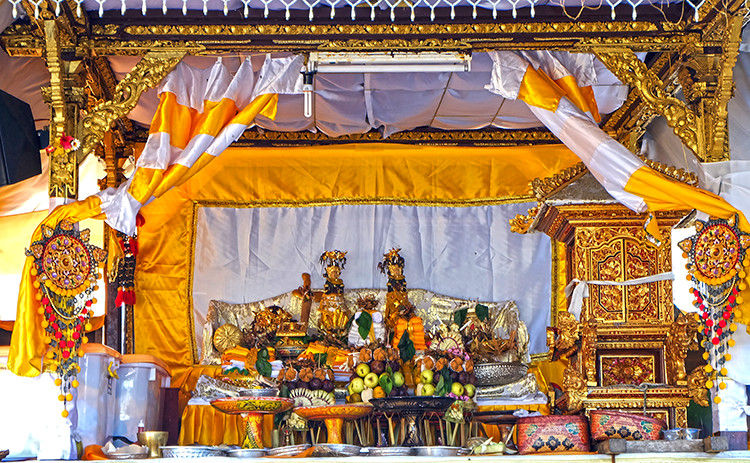
What is Pagerwesi, and why is it called the Iron Fence?
Pager means fence. Wesi means iron. The name is the whole idea: knowledge is powerful, so it needs guarding. Pagerwesi honours Sang Hyang Pramesti Guru, a form of Shiva worshipped as the teacher and protector of the universe. Families ask for a fence around the mind, the household and the spirit.
The date does not follow the Gregorian calendar. It lands on Buda Kliwon in the week of Sinta, part of the 210-day Pawukon cycle, so it moves about seven months from one year to the next. This year it comes four days after Saraswati Day, the day of knowledge. Saraswati celebrates learning. Pagerwesi protects it. The sequence runs like this:
Saturday 31 October: Saraswati Day, offerings for books, schools and learning.
Sunday 1 November: Banyu Pinaruh, ritual purification, often at the sea or a spring.
Monday 2 November: Soma Ribek, offerings to Bhatari Sri, the rice goddess, for a good harvest.
Tuesday 3 November: Sabuh Mas, prayers for prosperity.
Wednesday 4 November: Pagerwesi itself.
That is five days of layered ceremony. If you land in Bali on 31 October, you arrive in the middle of it. Plan for that rather than being surprised by it.
What actually happens on Pagerwesi?
The ritual moves outward in rings. Offerings and prayers start at the family shrine inside the home compound. Then the family heads to its extended-family temple. Then the village temple. Each step widens the circle of people being protected.
The scale changes by region. In Buleleng, on the north coast, Pagerwesi is celebrated on a scale close to Galungan, and families often make the Munjung pilgrimage to the graves of relatives. Around Canggu and Badung, expect something smaller. Pagerwesi here is a family affair, not a street event. You may see very little of it, and that is normal.
Pagerwesi is not a show. It is a family locking the gate on a Wednesday. — Evarah Collection editorial

What will you see around Canggu and Padonan?
Honest answer: small things, if you look. The island does not stop for Pagerwesi, so cafés, surf schools, restaurants and the airport all run as usual. Pagerwesi is not a national public holiday. What changes is the texture of the morning:
Women in kebaya carrying tiered offerings on their heads toward the nearest banjar temple.
Men in white udeng headcloths and families on scooters in matching temple clothes.
Extra canang sari, the woven palm-leaf offerings, at gateways, shrines and street corners.
Short slowdowns on narrow lanes near temples. Expect a scooter convoy, not a roadblock.
If you are staying in a villa, your housekeeper, driver or chef may ask for a few hours off for family prayers. Say yes. Book airport transfers and restaurant tables a day ahead, and you will not notice the gap. Padonan is five minutes on foot from a café, 17 minutes from Berawa beach and about 45 minutes from the airport, so a flexible plan beats a tight one.
How should visitors behave during Pagerwesi?
You are a guest at someone else’s prayer. Keep it simple and the day goes smoothly.
Wear a sarong and sash to enter any temple, and ask before you go in. Many village temples are closed to non-worshippers on ceremony days.
Never walk between worshippers and the shrine, and keep your head lower than the priest’s.
Step around offerings on the ground. Do not stand on them, and do not move them.
No flash, no drones, and no posing in front of people who are praying. Ask first if you want a photograph.
Balinese custom asks women who are menstruating not to enter temples. It is a long-standing rule, not a personal judgement.
How do you plan a trip around Pagerwesi week?
The good news is that early November is a strong week to be here. The ceremonies give you a window into Balinese life that no tour sells, and the crowds are thinner than the July and August peak. The next Tilem, the new moon, is on 9 November, and Galungan returns in January 2027, so this stretch is the island’s last quiet cultural window for a while.
Weather is the other variable. BMKG, Indonesia’s weather agency, expects Bali’s rainy season to start late November to December, later than usual, so 4 November should still sit on the dry side. Pack a light rain jacket anyway. Our guide to Bali’s late 2026 rainy season has the detail.
Pagerwesi FAQ
When is Pagerwesi 2026?
Pagerwesi is on Wednesday 4 November 2026, which is Buda Kliwon in the week of Sinta in the Balinese Pawukon calendar. It repeats every 210 days.
Is everything closed in Bali on Pagerwesi?
No. Pagerwesi is not Nyepi. Cafés, restaurants, beach clubs, shops and the airport operate normally. Some staff may take time for family prayers, so confirm bookings and transfers a day ahead.
What is the difference between Saraswati and Pagerwesi?
Saraswati honours the goddess of knowledge and is marked on Saturday 31 October 2026. Pagerwesi comes four days later and honours Sang Hyang Pramesti Guru, asking for protection of that knowledge and of the family.
Can tourists attend Pagerwesi ceremonies in Bali?
You can watch respectfully from outside. Most Pagerwesi prayers are private family rituals, and many temples limit entry to worshippers. If you are invited, wear a sarong and sash, follow the family’s lead and ask before taking photos.
Want to be in Padonan for it? Both of our private-pool villas sleep six: the Mediterranean-influenced Villa Zoya and the brutalist concrete-and-glass Nomad House. Early November is an easy week to book, and your team is a message away.


Comments